There isn’t one dental checkup schedule that fits everyone. Even without symptoms, you may have dental problems only a dentist can diagnose. Your dentist can explain when to return based on your needs.
Example call to action
Ask what sets your next checkup date.
02 / Text post
What if your health changed since your last dental visit?
Tell your dentist what's changed, even if you feel fine. Changes in your overall health can affect your dental health. At a checkup, your dentist or hygienist may ask about your recent medical history.
Example call to action
Write down one question before your visit.
03 / Post
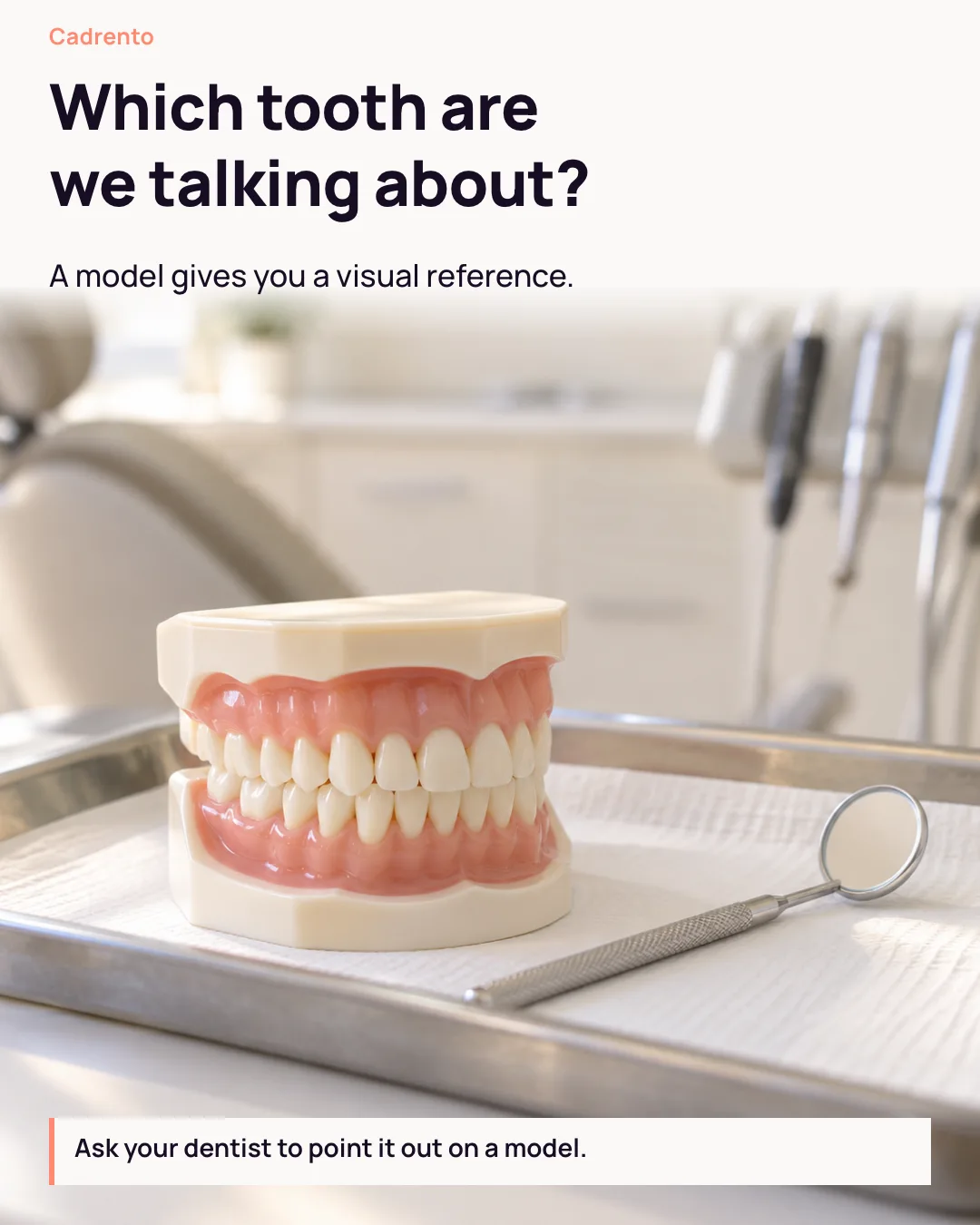
Which tooth does your dentist mean?
Read caption
At your first consultation, you may lose track of which tooth your dentist means. Seeing it on a model can help you follow the explanation.
Example call to action
Ask your dentist to point it out on a model.
04 / Post
No tooth pain before your checkup?
Read caption
At a checkup, the dentist or hygienist asks about your recent medical history and examines your mouth. The dentist decides whether X-rays are needed.
Example call to action
Ask what your dentist will check.
05 / Carousel
Five questions to ask when a filling comes up
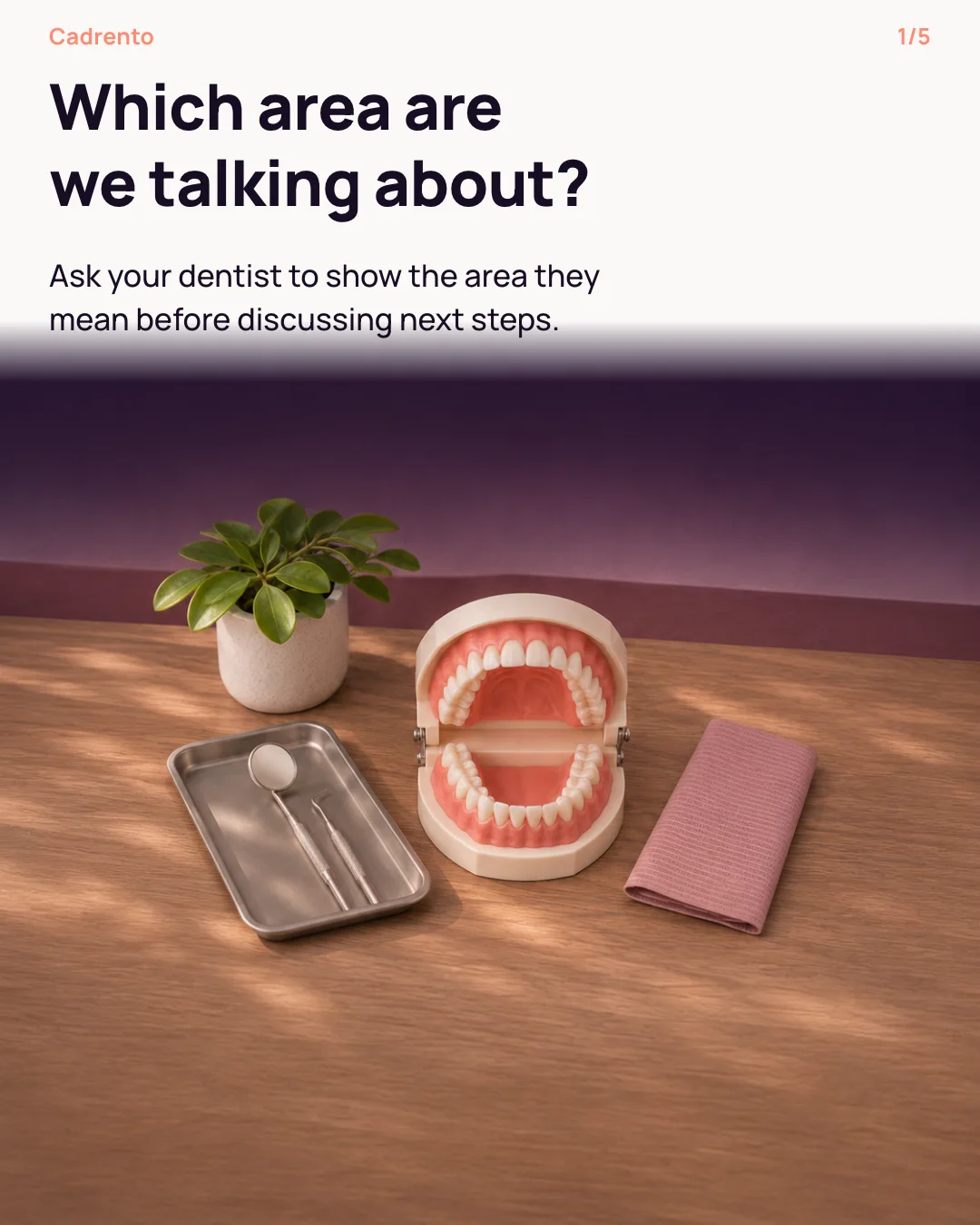
Slide 1 of 5Which area are we talking about?
Ask your dentist to show the area they mean before discussing next steps.
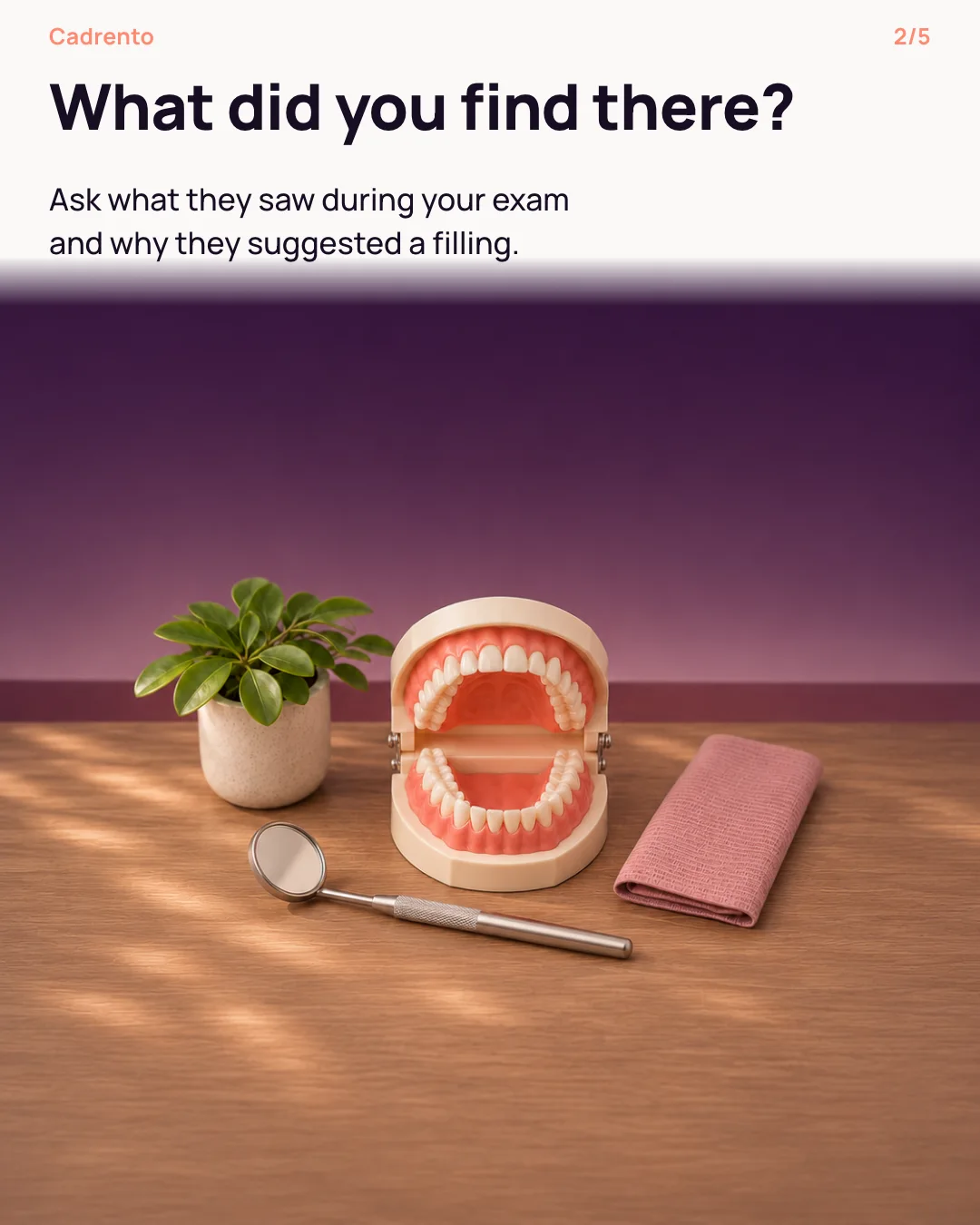
Slide 2 of 5What did you find there?
Ask what they saw during your exam and why they suggested a filling.
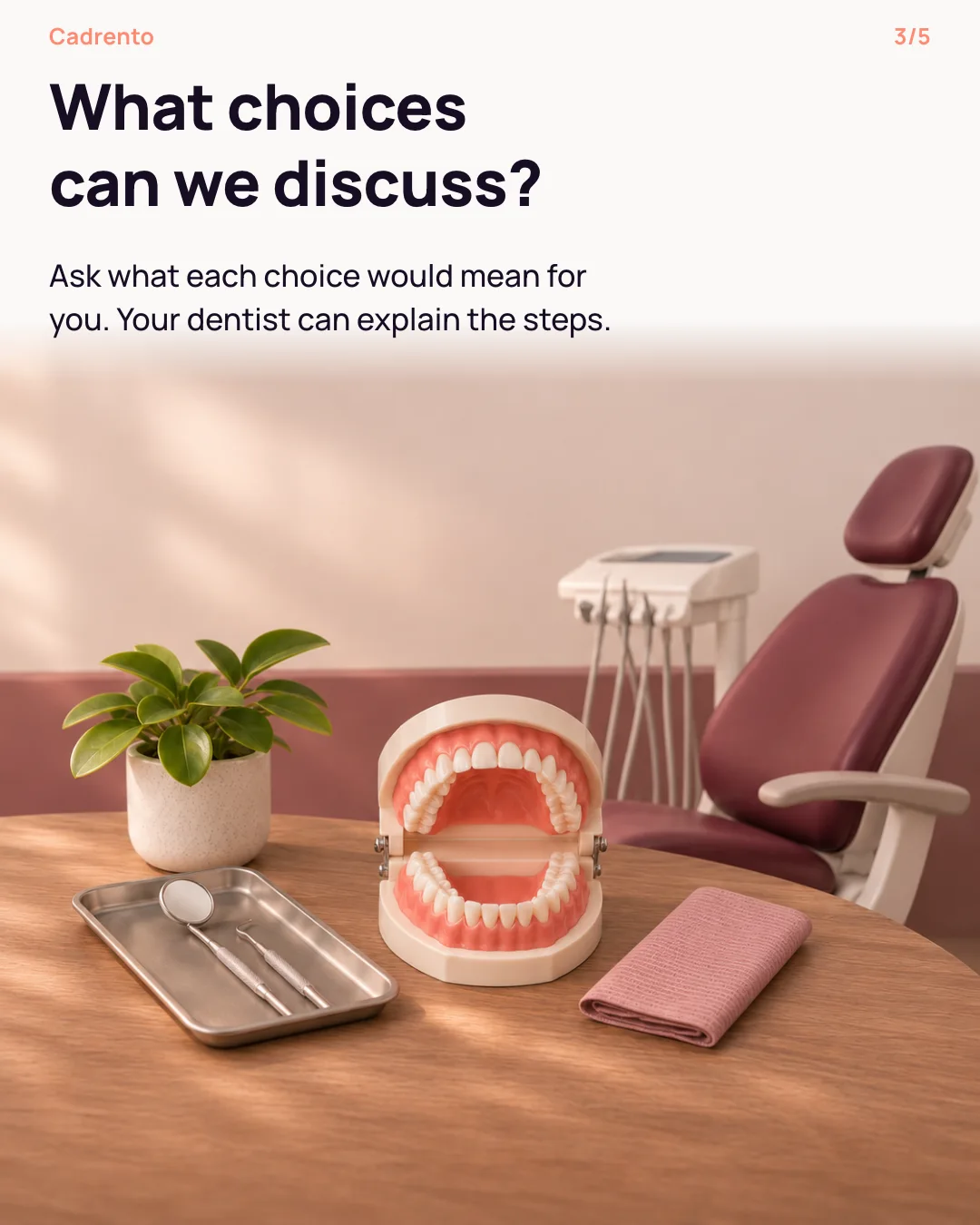
Slide 3 of 5What choices can we discuss?
Ask what each choice would mean for you. Your dentist can explain the steps.
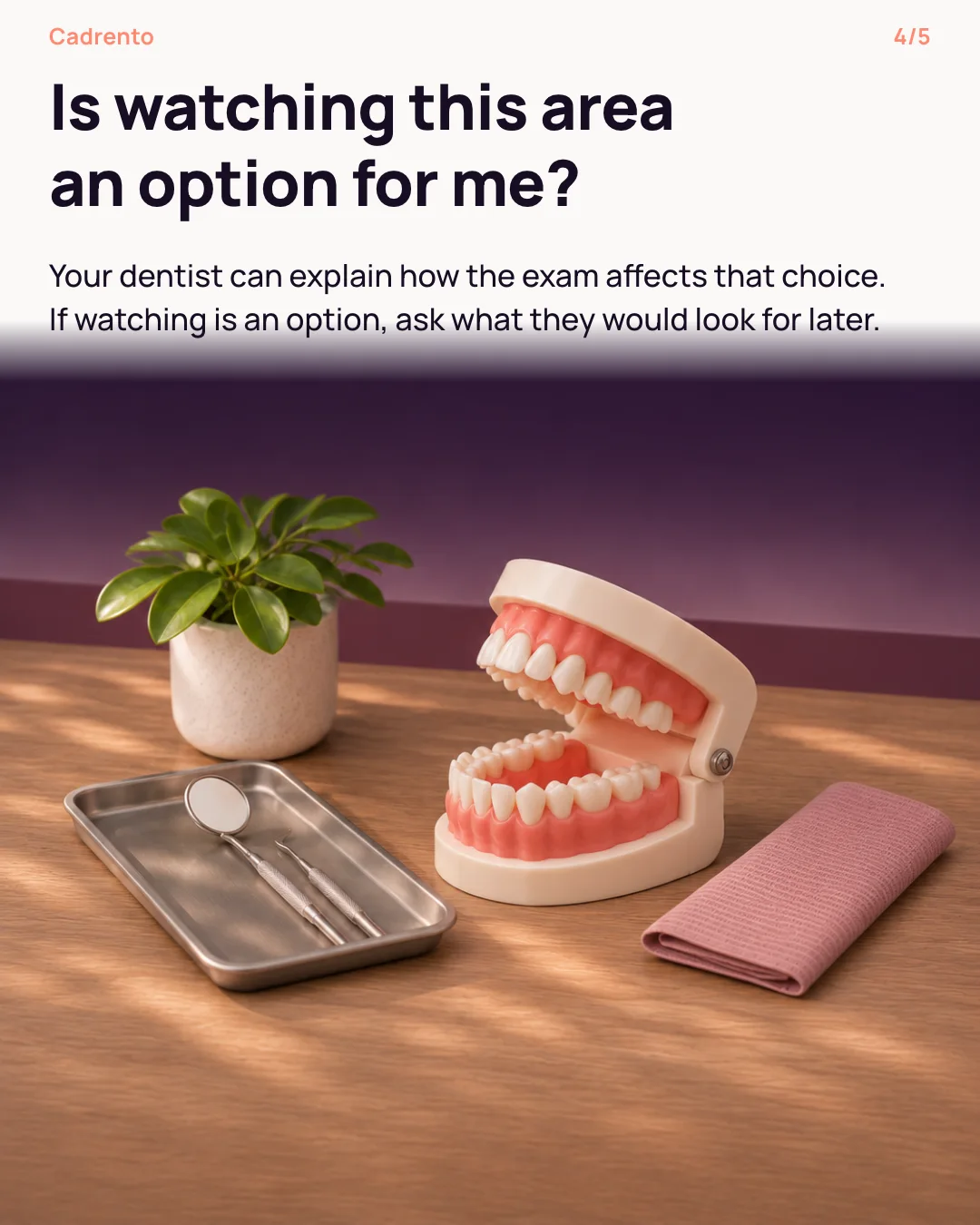
Slide 4 of 5Is watching this area an option for me?
Your dentist can explain how the exam affects that choice. If watching is an option, ask what they would look for later.
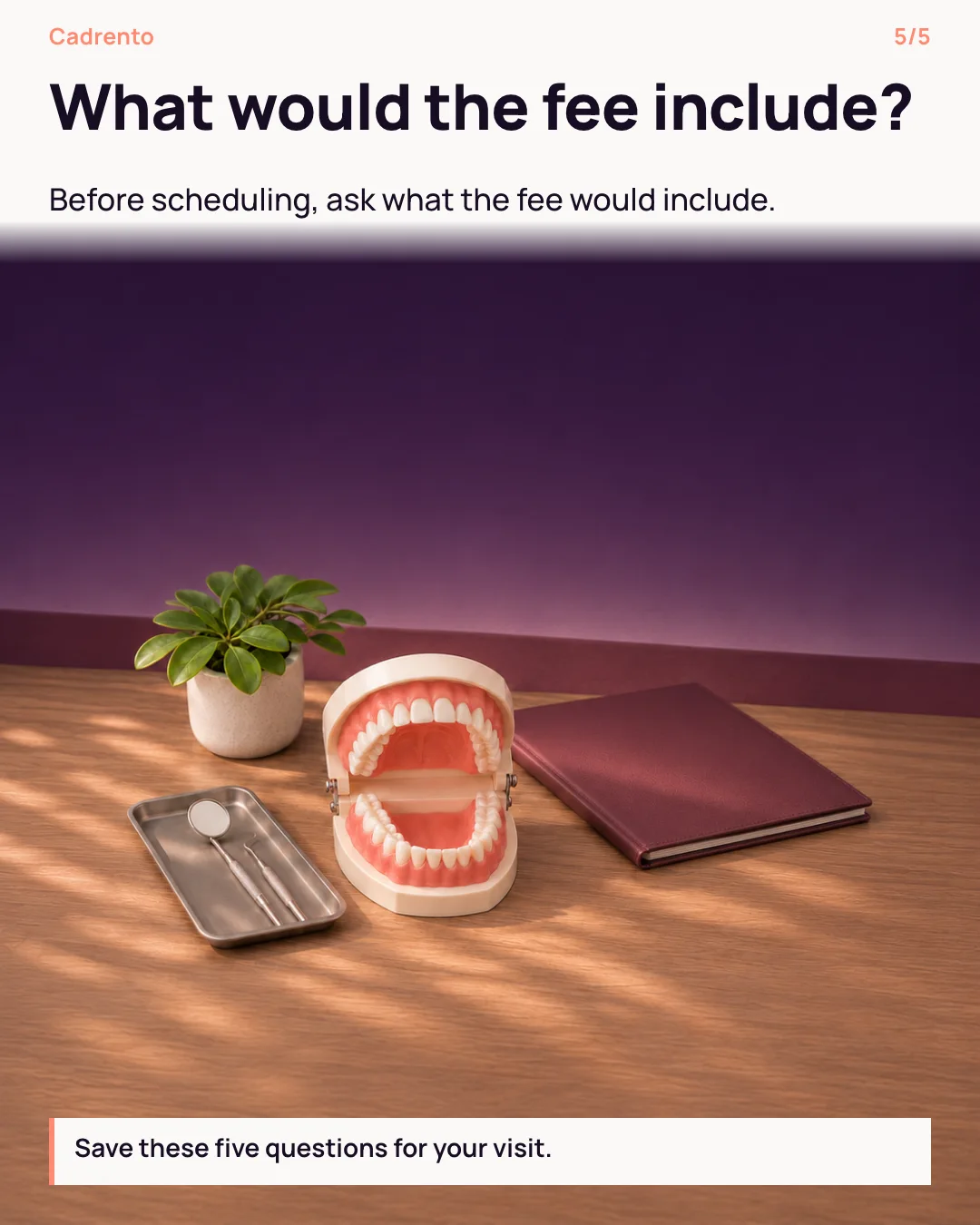
Slide 5 of 5What would the fee include?
Before scheduling, ask what the fee would include.
Scroll through every slide, or use the numbered links.
Read caption
These questions are prompts for a conversation about your own exam. Your dentist can explain which choices fit your situation, including whether watching the area is an option. The model is an illustration.
Example call to action
Save these five questions for your visit.
06 / Carousel
Bleeding while brushing or flossing? Here’s what to tell your dentist.
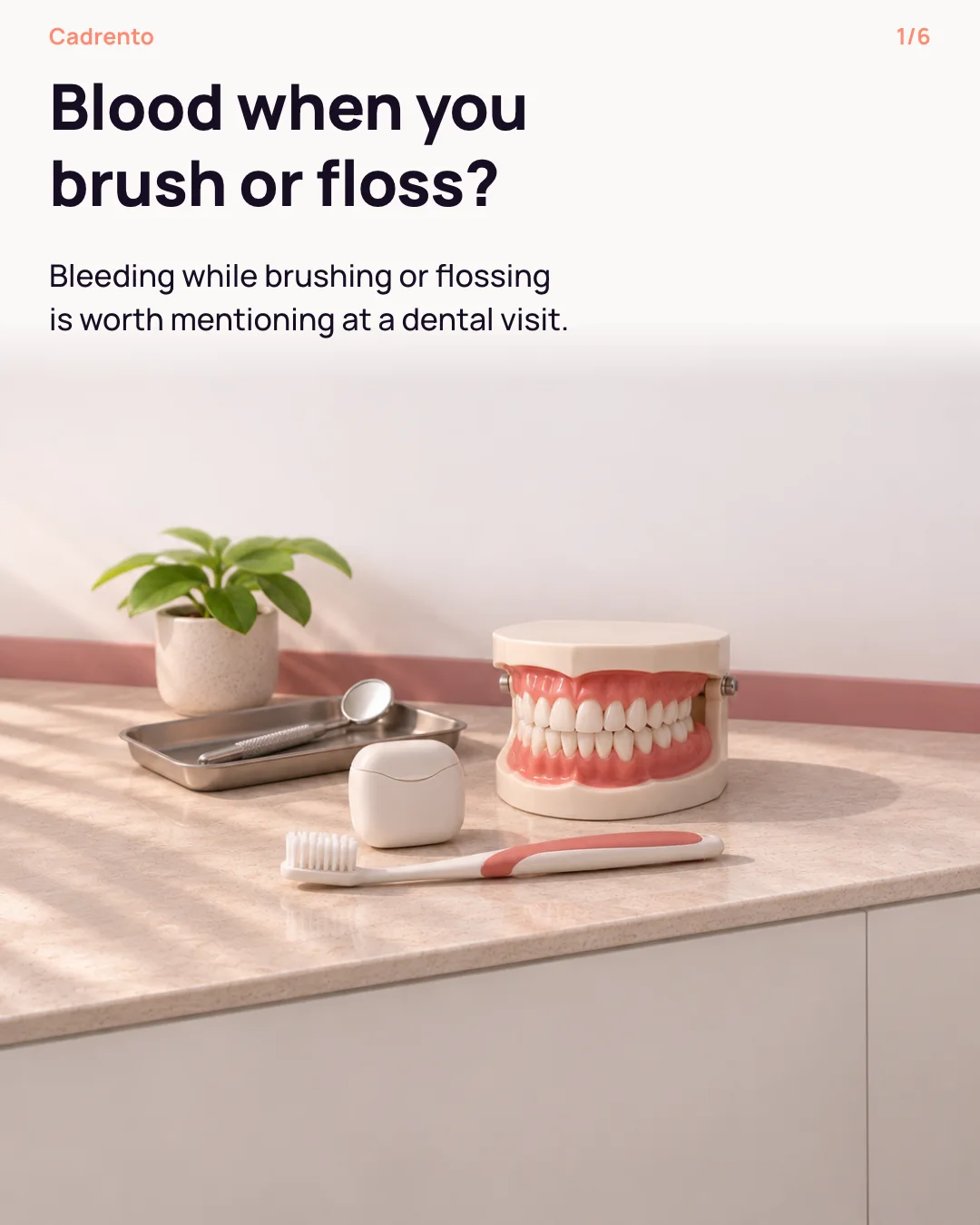
Slide 1 of 6Blood when you brush or floss?
Bleeding while brushing or flossing is worth mentioning at a dental visit.
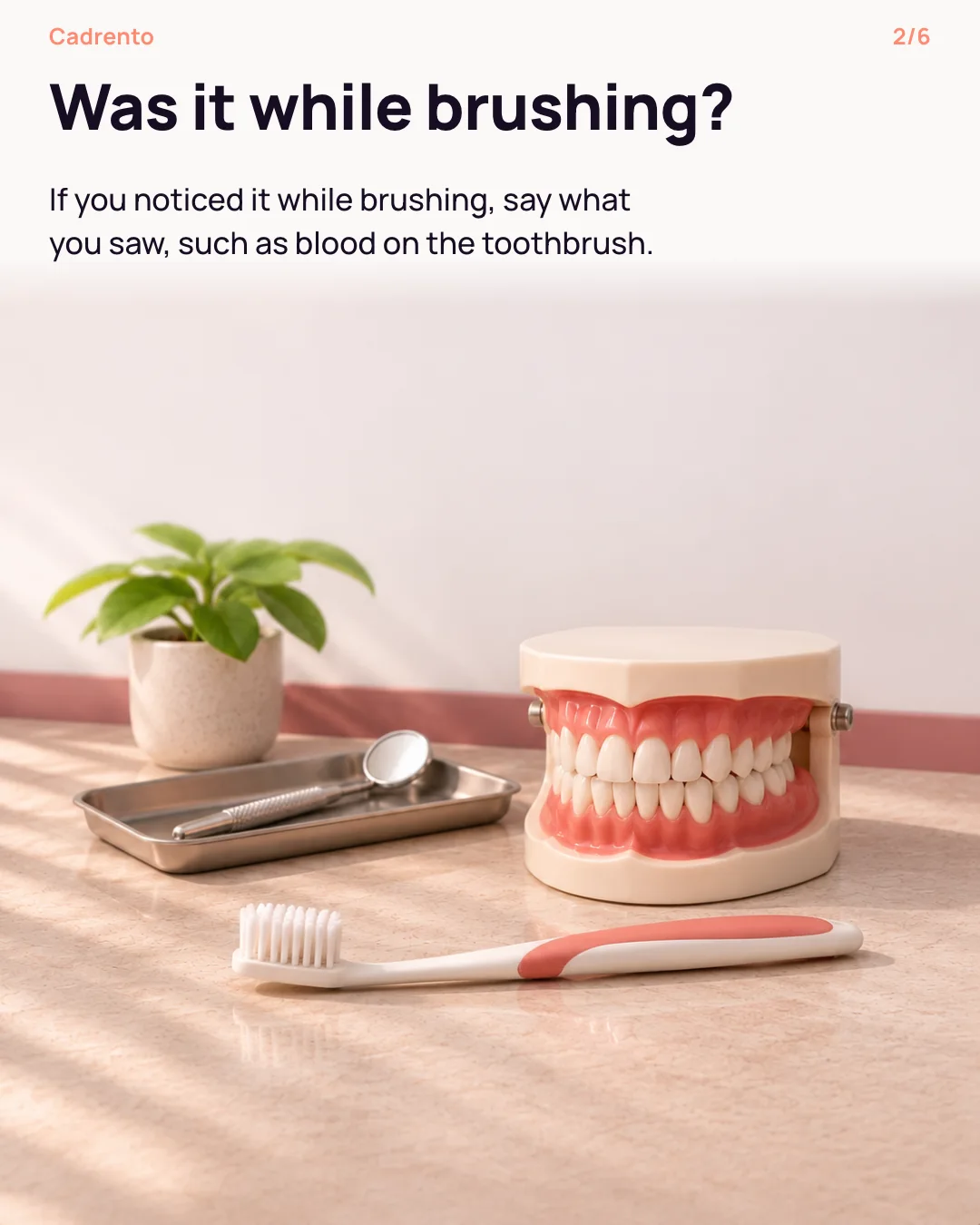
Slide 2 of 6Was it while brushing?
If you noticed it while brushing, say what you saw, such as blood on the toothbrush.
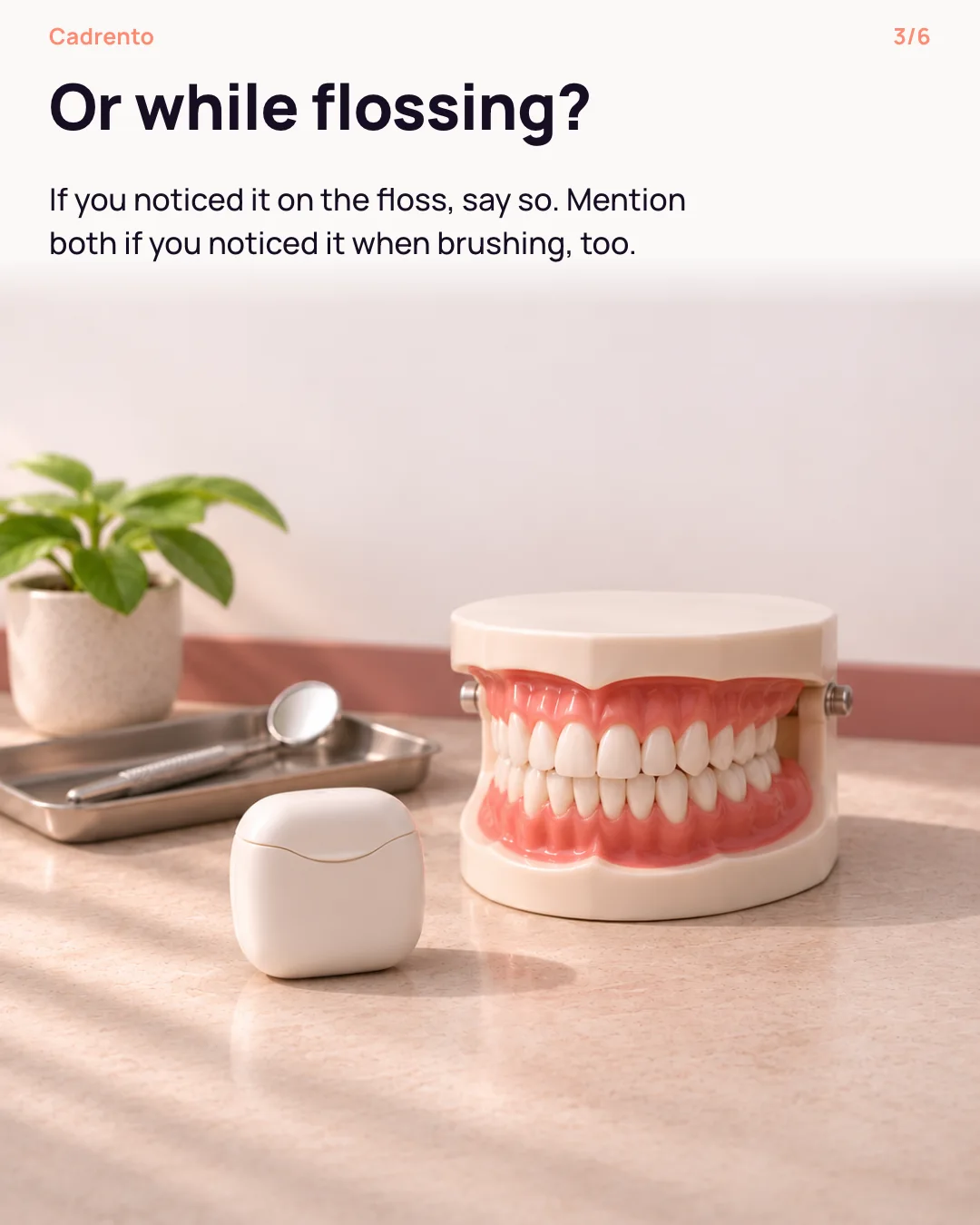
Slide 3 of 6Or while flossing?
If you noticed it on the floss, say so. Mention both if you noticed it when brushing, too.
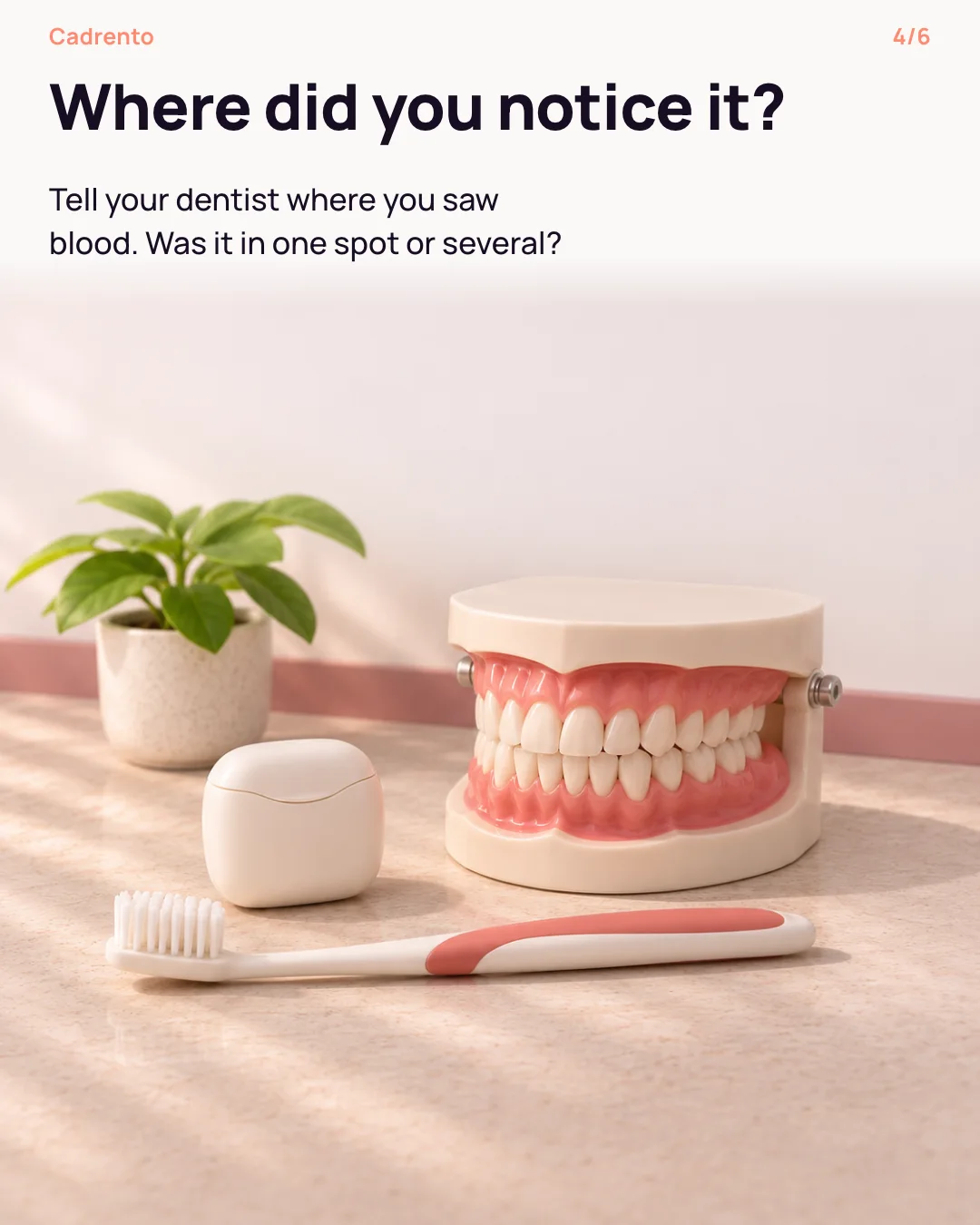
Slide 4 of 6Where did you notice it?
Tell your dentist where you saw blood. Was it in one spot or several?
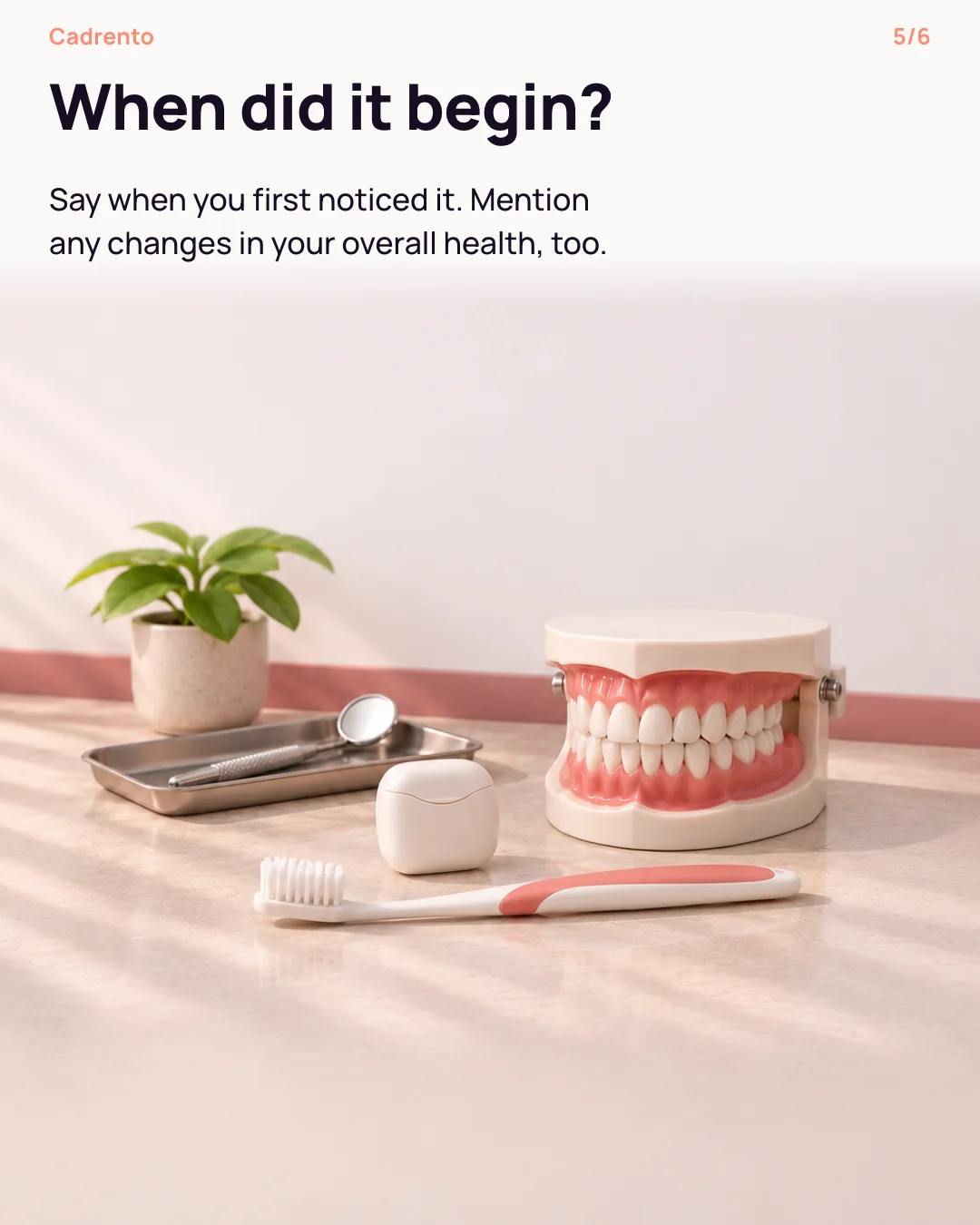
Slide 5 of 6When did it begin?
Say when you first noticed it. Mention any changes in your overall health, too.
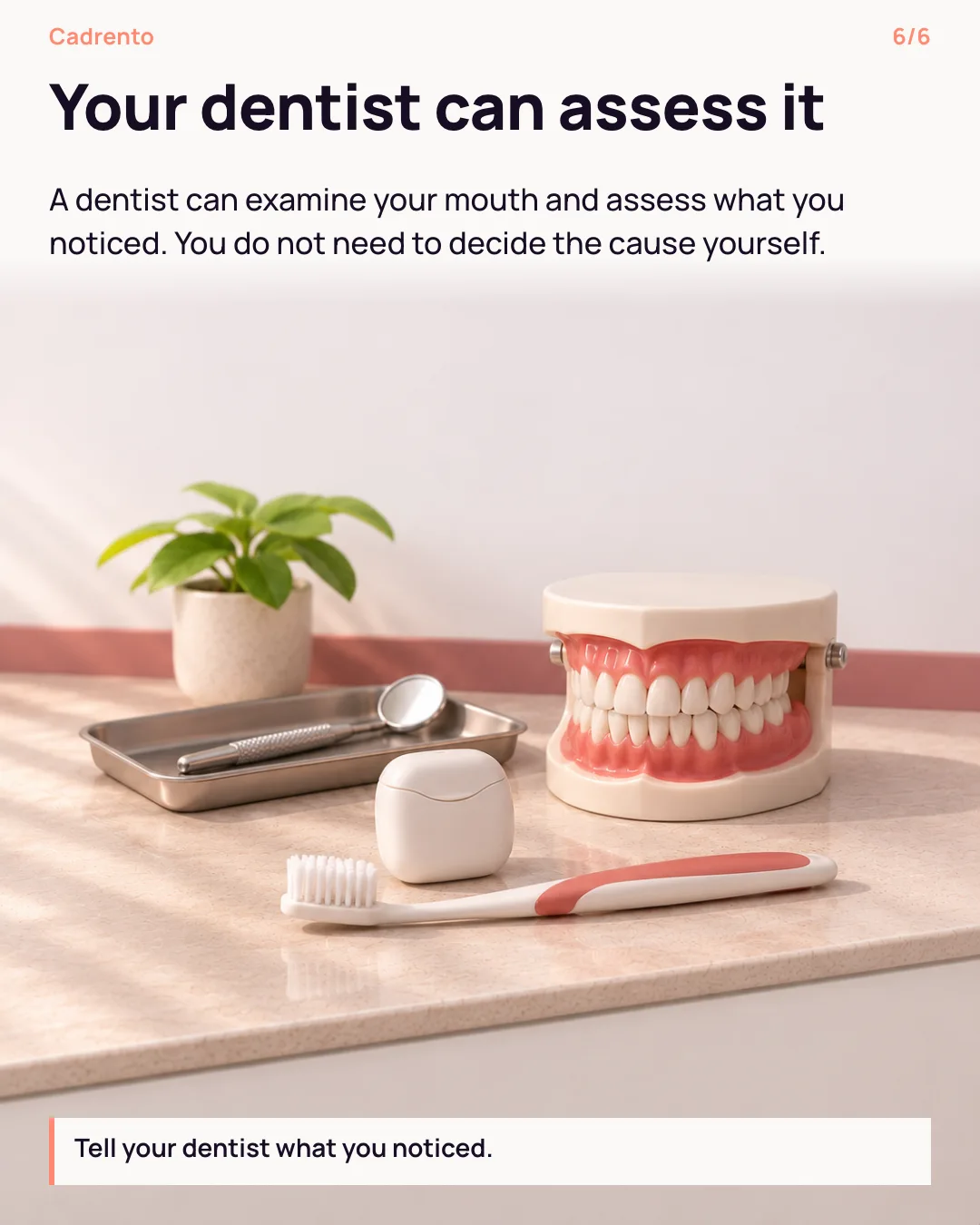
Slide 6 of 6Your dentist can assess it
A dentist can examine your mouth and assess what you noticed. You do not need to decide the cause yourself.
Scroll through every slide, or use the numbered links.
Read caption
Noticed blood on the floss? Tell your dentist if you remember where in your mouth you were flossing.
Example call to action
Tell your dentist what you noticed.
07 / Video
Cold drink or chewing: what should you tell your dentist?
Does cold water bother a tooth? You might say, “I feel it on the left when I drink cold water.”
Read text
Does a tooth bother you when you drink something cold or when you chew? Tell your dentist when it happens and where you feel it. Those details describe your experience, but they don't reveal the cause. Your dentist can examine your mouth after hearing your description. Ask which details would help your dentist.
If your dentist suggests an X-ray, ask what the image would help them check.
Read text
Why might you need an X-ray at this visit? At a checkup, your dentist may ask about your recent health and examine your mouth. Then they decide whether an X-ray is needed. Ask what question the X-ray would answer.
Example call to action
Ask what question the X-ray would answer.
09 / Stories
Nervous about a dental checkup? Four things you can say.
Frame 1 of 4I feel anxious.
You can say this before the exam begins.
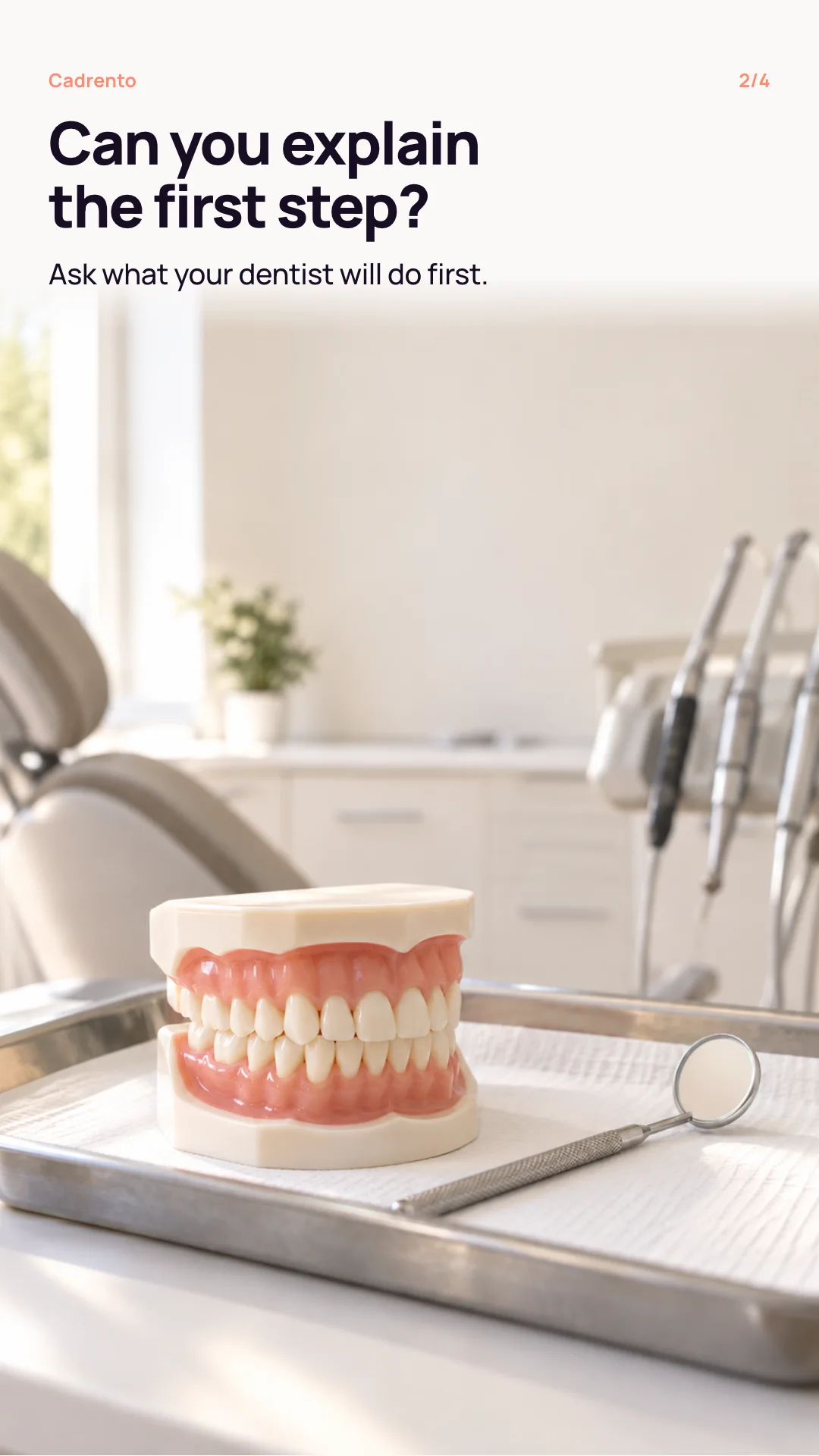
Frame 2 of 4Can you explain the first step?
Ask what your dentist will do first.
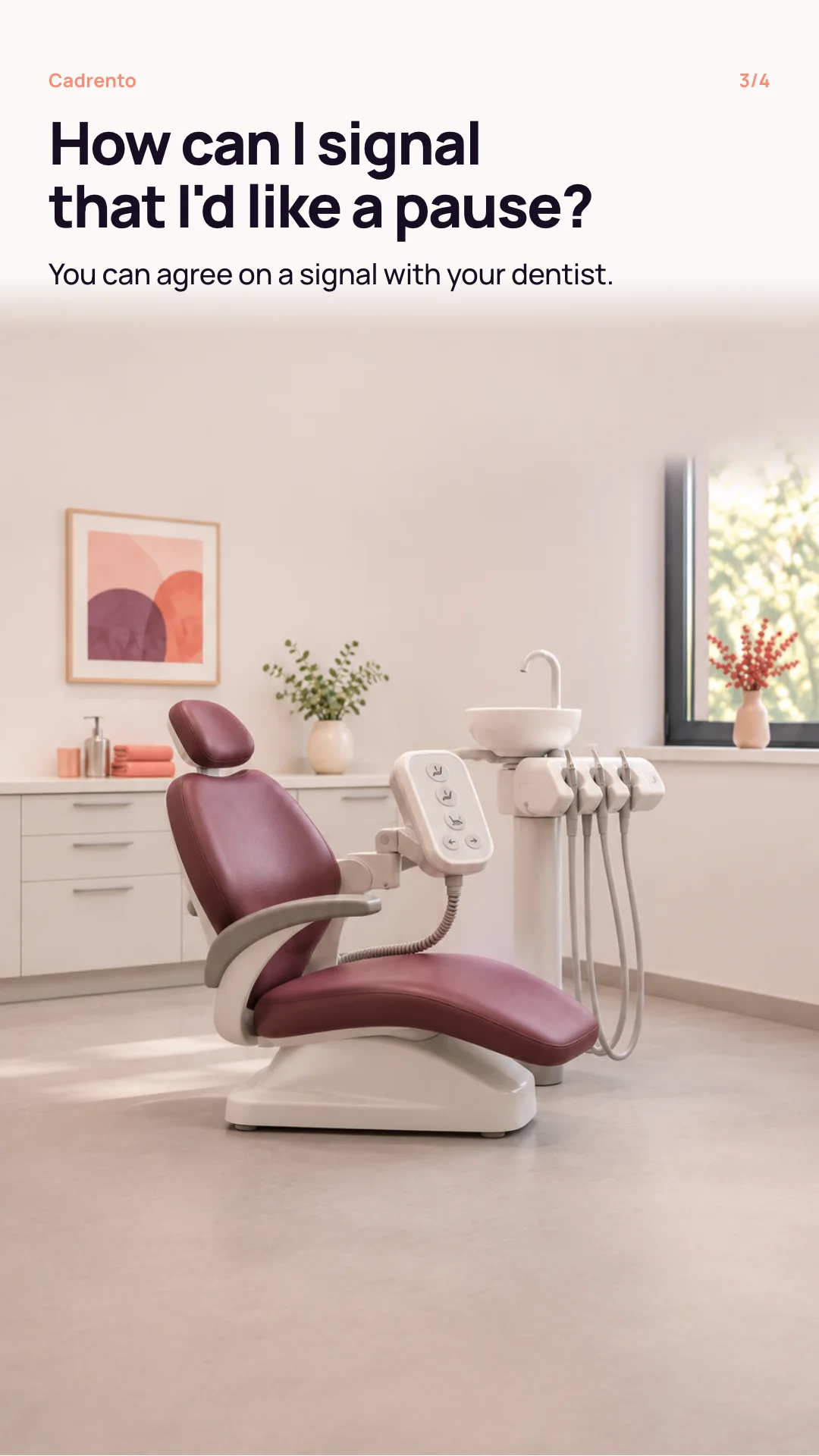
Frame 3 of 4How can I signal that I'd like a pause?
You can agree on a signal with your dentist.
Frame 4 of 4What happens next?
Your dentist can explain the next step for your visit.
Scroll through every frame, or use the numbered links.
Read caption
A dental checkup may include questions about your medical history and an exam of your mouth. The dentist decides whether X-rays are needed. These phrases give you a starting point for the conversation.
Example call to action
Ask what comes next before you leave.
10 / Article
What happens at your first dental checkup?
Read the full article
At a first dental checkup, it helps to know what to say, what may be checked, and what to ask before you leave. You can bring up a concern without naming its cause. You can also ask why an X-ray or a follow-up visit is being discussed.
Tell them what has changed
The dentist or hygienist asks about your recent medical history. You can use that opening to mention changes in your health and anything you want them to understand. If this is your first visit with this dentist, you can also ask how your medical and dental history will be recorded. You do not need to decide what a symptom means before you mention it. For example, sensitivity to hot or cold, gums that bleed when you brush or floss, or difficulty chewing are all worth bringing up. Those details describe what you notice; they do not establish a cause. If you are unsure how to explain a concern, start with when you notice it. For example, you might say, “I first felt it when I drank cold water.”
Ask what the checkup covers
A checkup includes an examination of your mouth, according to the ADA's guide to dental visits. Depending on your care plan, a gum assessment may also be part of the visit. You can ask what the dentist or hygienist is checking and whether anything they find needs further discussion. X-rays are a separate decision: the dentist determines whether they are needed. If images come up, a useful question is, “What would these help you find out in my case?” That question invites an explanation without assuming every first visit needs images. A checkup can matter even when you have no symptoms. The ADA notes that some dental problems are diagnosed only by a dentist.
Clarify what happens next
Before you leave, find out what the dentist found and what they recommend next. If a follow-up visit is suggested, ask when they want to see you again and why that timing fits your situation. The ADA says dental needs differ, so there is no single visit schedule that suits everyone. If a procedure or another visit is proposed, you can ask the dentist to explain it before deciding how to proceed. Before you schedule treatment, ask what the fee covers. Notes can help you remember the answers after the visit.
A first checkup is easier to follow when each conversation answers a different question: what should the dentist know, what are they checking, and what happens next? Your answers may depend on what the dentist finds and on your care plan. You do not have to turn the visit into a self-diagnosis.
Your business. Your own content.
Let’s discuss your content.
Tell us about your business and the formats you need. Scope and availability are confirmed before payment.
We use Google Analytics only with your permission to understand public page visits, content interactions and website performance. No advertising tracking in this analytics setup. Read our privacy notice.
Analytics is off unless you accept. Your choice will not affect the website.