CadrentoLet’s talk
← All examples

Illustrative examples

Heating and cooling

Preparing for an HVAC visit, comparing written proposals and considering repair or replacement.

10 examples · 6 formats. Demonstration content, not a client case study or a promise of results.

Browse all 10 examples
  1. What should you note before an HVAC visit?
  2. Does one uncomfortable room mean a new HVAC system?
  3. What should you have ready for an HVAC visit?
  4. Is a bigger HVAC system better for your home?
  5. What happens before you compare HVAC estimates?
  6. Repair or replace? Compare what’s in writing.
  7. What should a contractor check before recommending a new heating and cooling system?
  8. What's in the proposal before heating and cooling work starts?
  9. Before you compare HVAC quotes
  10. Repair or replace your HVAC system? Start with what you know

01 / Text post

What should you note before an HVAC visit?

Write down your current system’s model and what you know about its maintenance. Note any rooms that feel uncomfortable. These details help the contractor understand your heating needs.

Threads version

Getting ready for an HVAC visit? Write down your system model and maintenance history. Note any rooms that feel uncomfortable. These details help the contractor understand your heating needs.

Keep your notes handy for the visit.

Bluesky version

Before an HVAC visit, note your system model, maintenance history, and any uncomfortable rooms. These details help the contractor understand your heating needs.

Keep your notes handy for the visit.

Example call to action

Keep your notes handy for the visit.

02 / Text post

Does one uncomfortable room mean a new HVAC system?

Before a visit, note which room feels uncomfortable. That detail matters, but it can't tell you whether the system needs repair or replacement. A contractor should inspect your current system and home to assess your needs.

Threads version

One room feels uncomfortable. Does that mean you need a new HVAC system? Note the room before a contractor visits. That detail can't tell you whether the system needs repair or replacement. A contractor should inspect your current system and home to assess your needs. Ask what the home evaluation found.

Bluesky version

One uncomfortable room is worth noting before a contractor visits. It can't tell you whether to repair or replace your HVAC system. The contractor should inspect your system and home to assess your needs. Ask what the home evaluation found.

Example call to action

Ask what the home evaluation found.

03 / Post

What should you have ready for an HVAC visit?

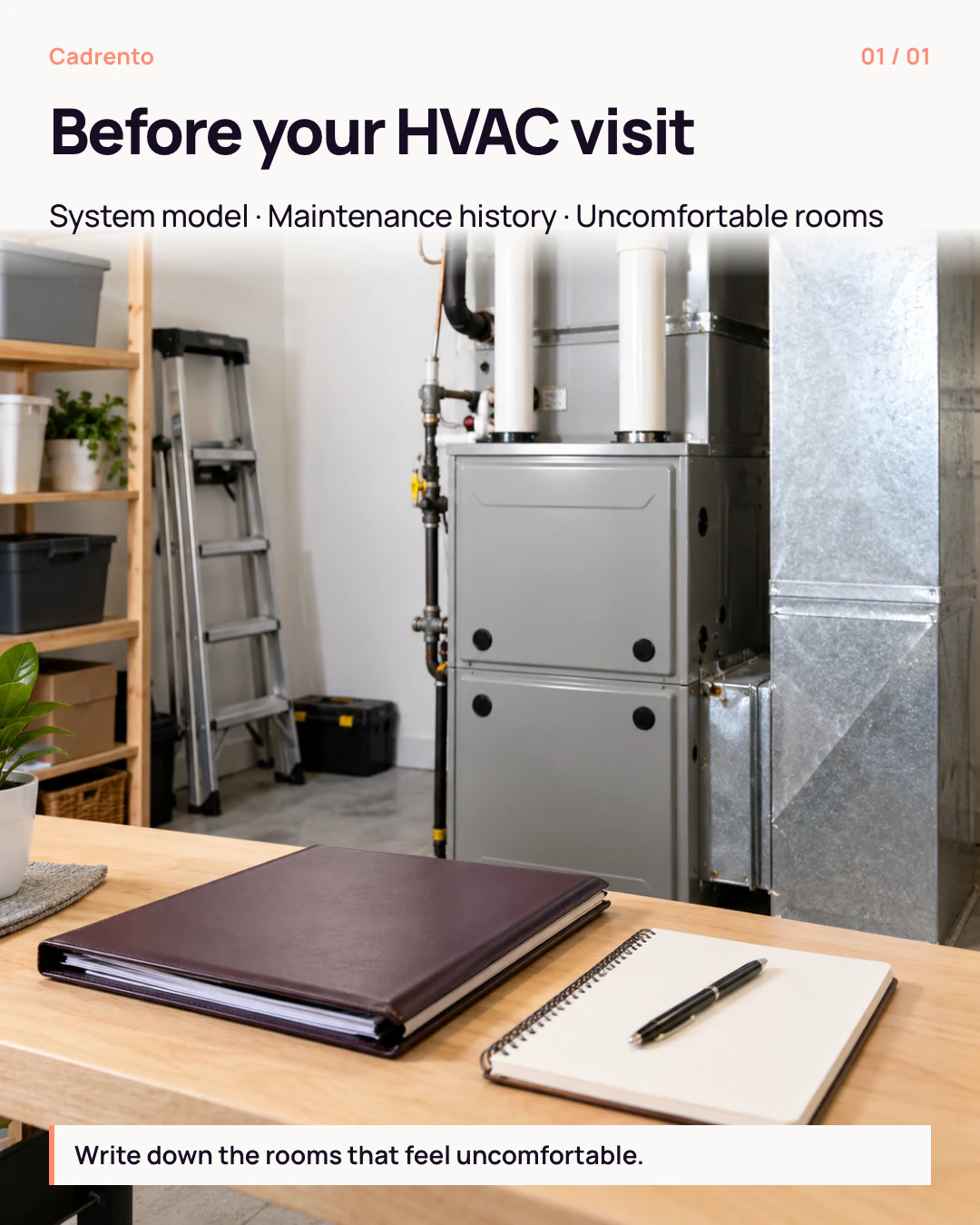
An indoor HVAC unit in a home utility room, with a closed folder and blank notebook nearby.
Read caption

The visit should include an inspection of your current system and home. Knowing your system model and maintenance history helps the contractor understand your heating needs.

Read text

System model · Maintenance history · Uncomfortable rooms

Example call to action

Write down the rooms that feel uncomfortable.

04 / Post

Is a bigger HVAC system better for your home?

Planned image of a residential room with an indoor HVAC unit visible through an open doorway while a specialist examines a window.
Read caption

Before recommending a system size, a contractor should inspect your current system and home. That evaluation should account for your home's size, insulation, and windows.

Read text

Your home's size, insulation, and windows matter.

Example call to action

Ask how the system size was chosen.

05 / Carousel

What happens before you compare HVAC estimates?

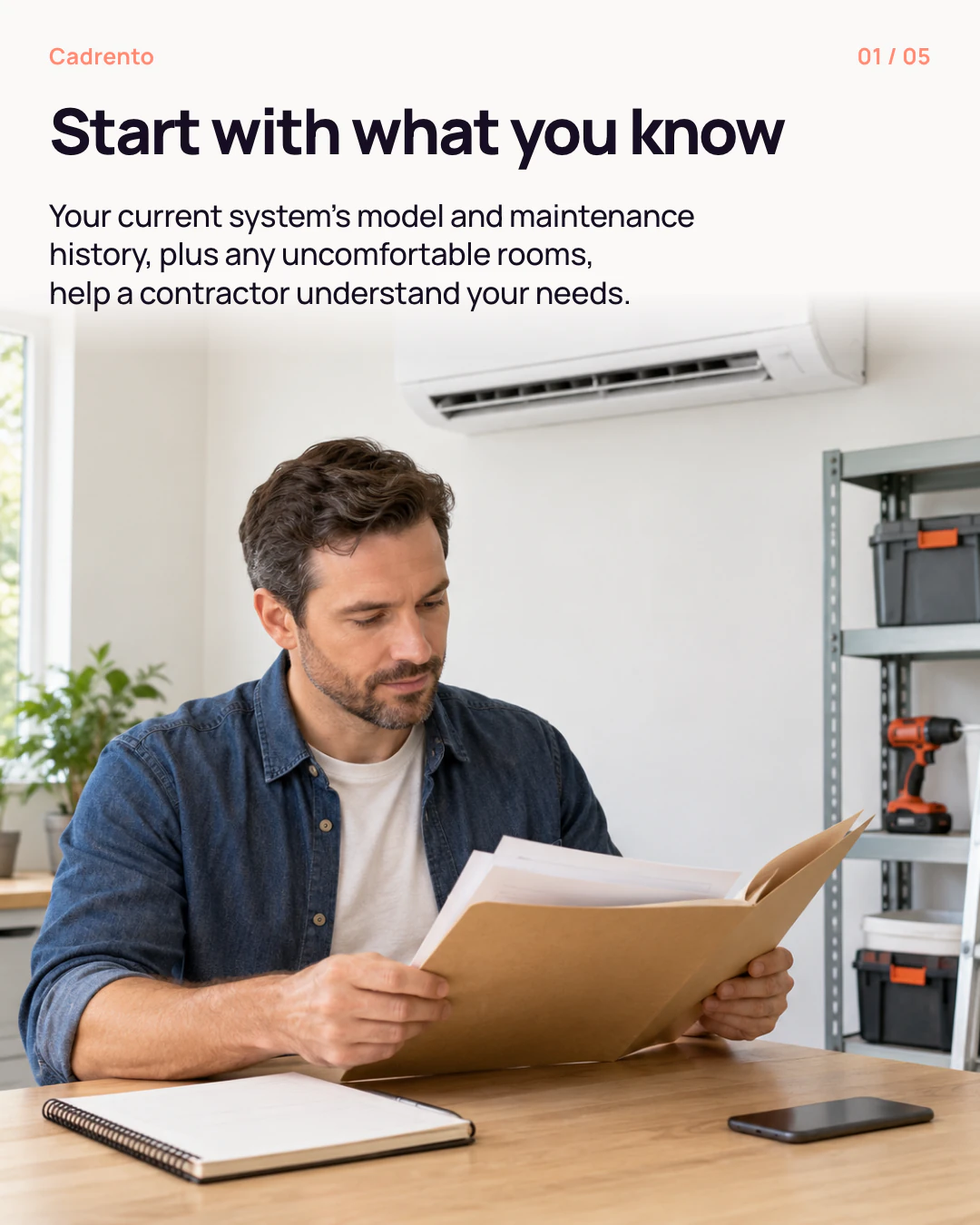
  1. A white indoor HVAC unit in a utility room, with a closed maintenance folder and blank notebook on a table.
    Slide 1 of 5Start with what you know

    Your current system’s model and maintenance history, plus any uncomfortable rooms, help a contractor understand your needs.

  2. In the same utility room, a specialist looks at the closed white HVAC unit and its connections from a safe distance.
    Slide 2 of 5Next comes a system inspection

    A contractor should spend time inspecting your current system and home to understand what you need.

  3. From the utility room, a window in the next room and insulation by a closed attic hatch are visible; a specialist stands on the floor.
    Slide 3 of 5Your home helps determine the system size

    House size, insulation, and windows should all factor into sizing a heating and cooling system.

  4. A specialist holds a measuring tool near an accessible grille, beside the white HVAC unit and a connected metal duct.
    Slide 4 of 5If you have ducts, they matter too

    The contractor should check ducts for air leaks and insulation, then measure airflow against the manufacturer’s specifications.

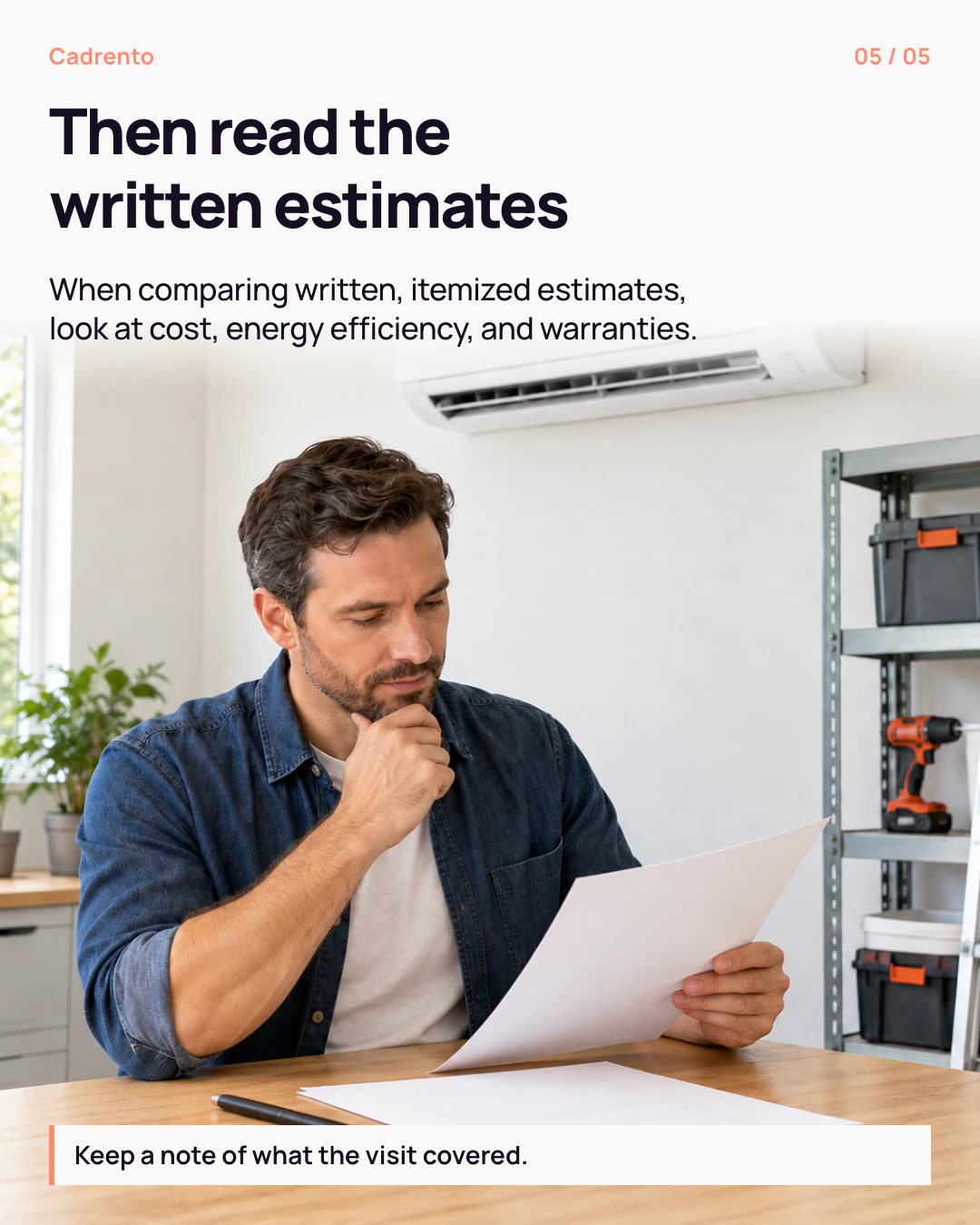
  5. Two blank estimate pages and a pen lie on a table, with the same white HVAC unit in the background.
    Slide 5 of 5Then read the written estimates

    When comparing written, itemized estimates, look at cost, energy efficiency, and warranties.

Read caption

What the contractor checked in your home can help you compare HVAC estimates. When comparing written, itemized quotes, look at cost, energy efficiency, and warranties. Keep a note of what the visit covered.

Read text

Start with what you know Your current system’s model and maintenance history, plus any uncomfortable rooms, help a contractor understand your needs.

Next comes a system inspection A contractor should spend time inspecting your current system and home to understand what you need.

Your home helps determine the system size House size, insulation, and windows should all factor into sizing a heating and cooling system.

If you have ducts, they matter too The contractor should check ducts for air leaks and insulation, then measure airflow against the manufacturer’s specifications.

Then read the written estimates When comparing written, itemized estimates, look at cost, energy efficiency, and warranties.

Instagram caption

It helps to know your current system’s model and maintenance history, and which rooms feel uncomfortable. A contractor should inspect the system and home, including ducts if you have them. When comparing written, itemized estimates, look at cost, energy efficiency, and warranties. Keep a note of what the visit covered.

Example call to action

Keep a note of what the visit covered.

06 / Carousel

Repair or replace? Compare what’s in writing.

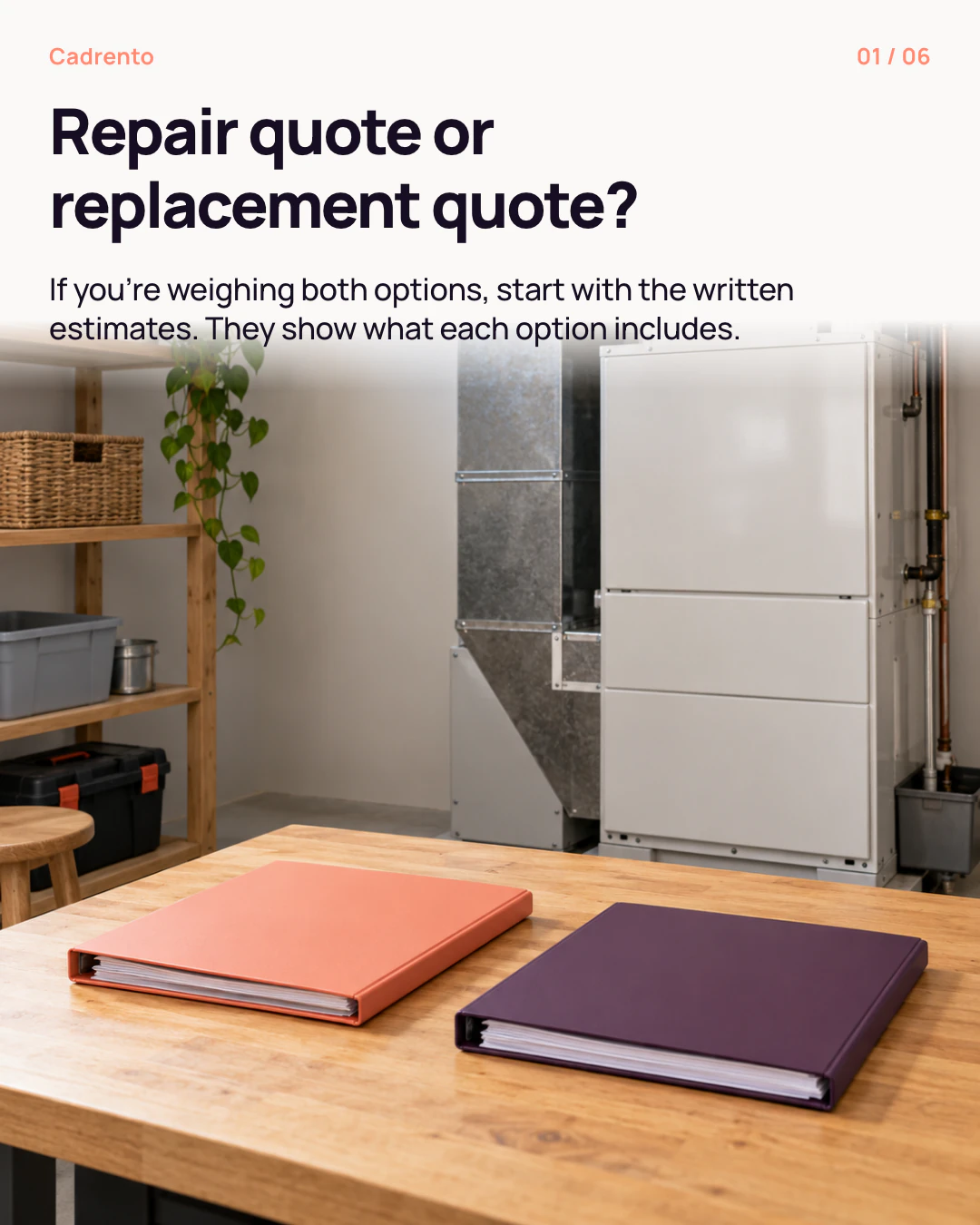
  1. Planned photo of a home utility room with a white HVAC unit behind a worktable holding two plain folders.
    Slide 1 of 6Repair quote or replacement quote?

    If you’re weighing both options, start with the written estimates. They show what each option includes.

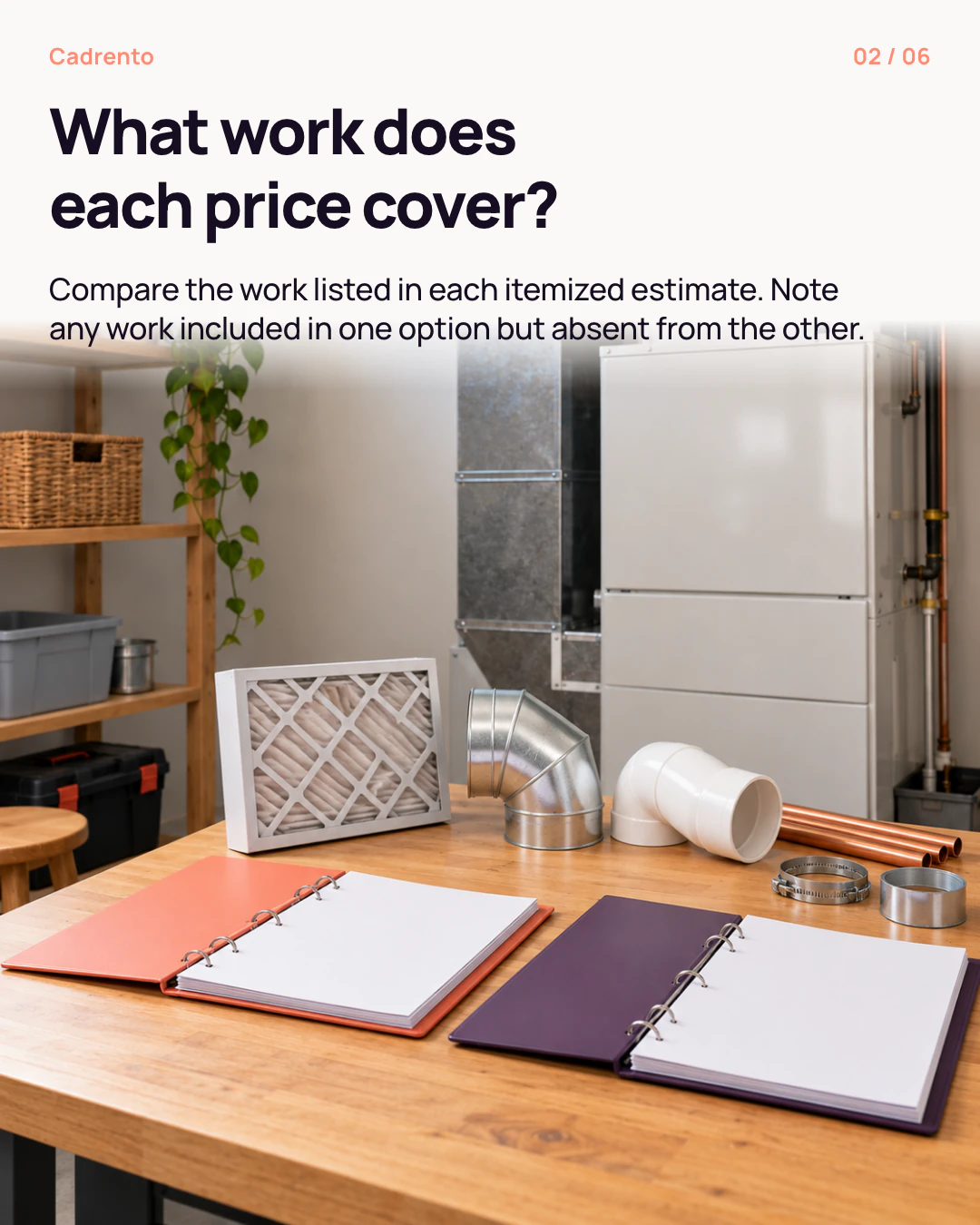
  2. The same utility room and HVAC unit, with two open folders of blank pages and a few unboxed system parts on the table.
    Slide 2 of 6What work does each price cover?

    Compare the work listed in each itemized estimate. Note any work included in one option but absent from the other.

  3. The same HVAC unit and worktable, with a small unbranded equipment component beside one folder and blank paper.
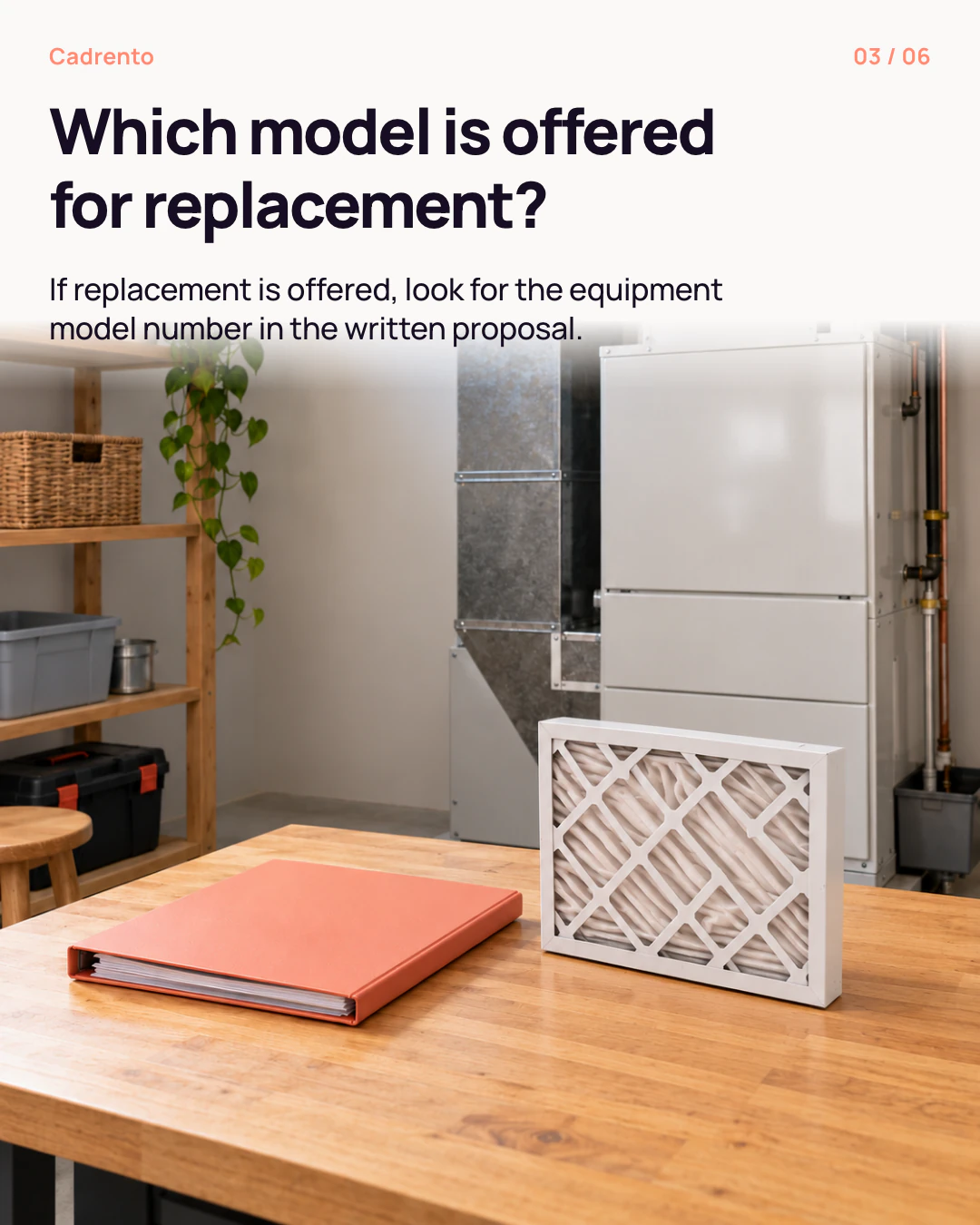
    Slide 3 of 6Which model is offered for replacement?

    If replacement is offered, look for the equipment model number in the written proposal.

  4. The same utility room, with two folders and a measuring device with its screen off on the worktable.
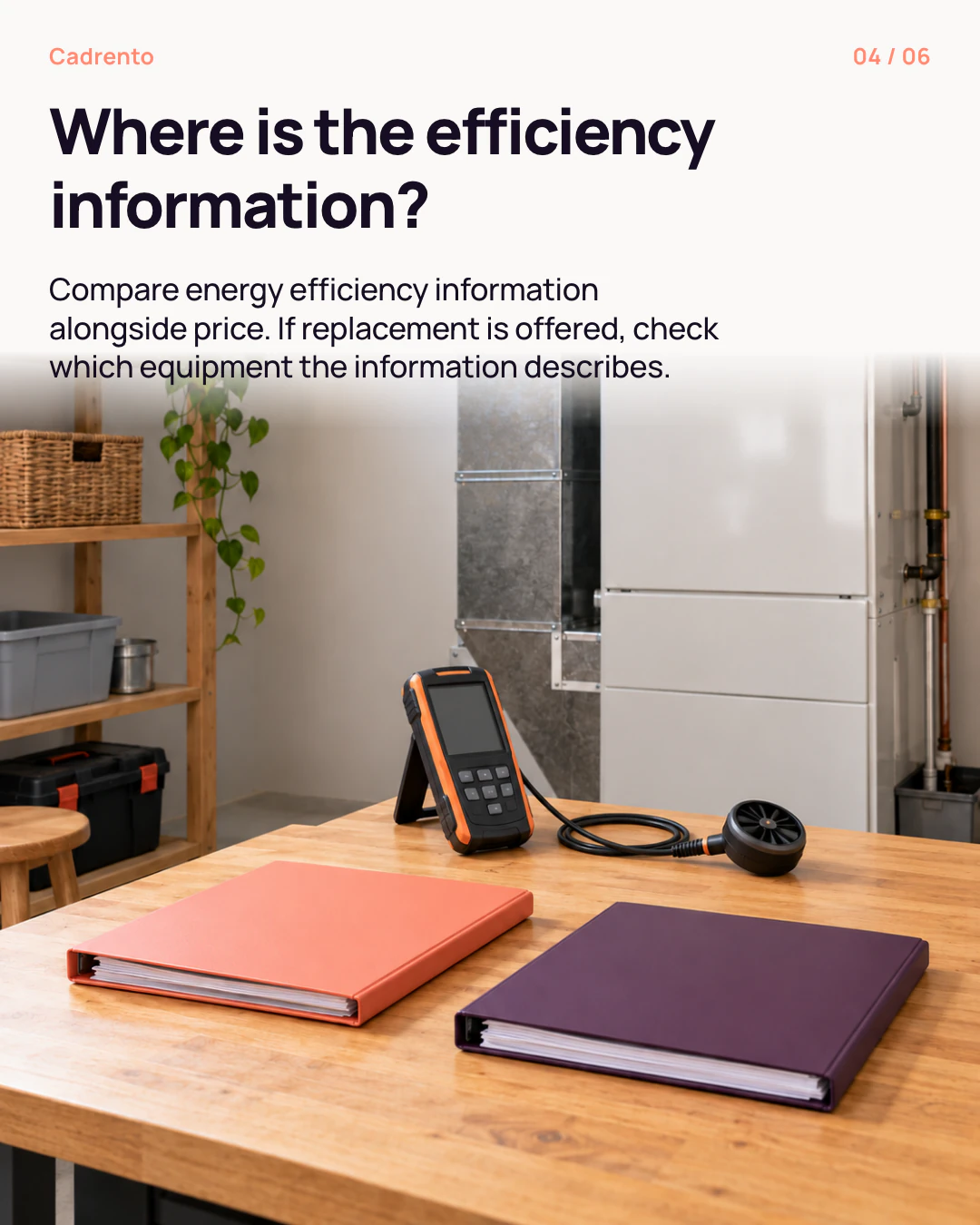
    Slide 4 of 6Where is the efficiency information?

    Compare energy efficiency information alongside price. If replacement is offered, check which equipment the information describes.

  5. A close view of two closed folders beside the same HVAC unit, each topped with a blank sheet.
    Slide 5 of 6What warranty information is in each proposal?

    Written proposals should include warranty information. Compare what each option says.

  6. The same worktable and HVAC unit, with two folders, a pen, and a desk calendar without dates or writing.
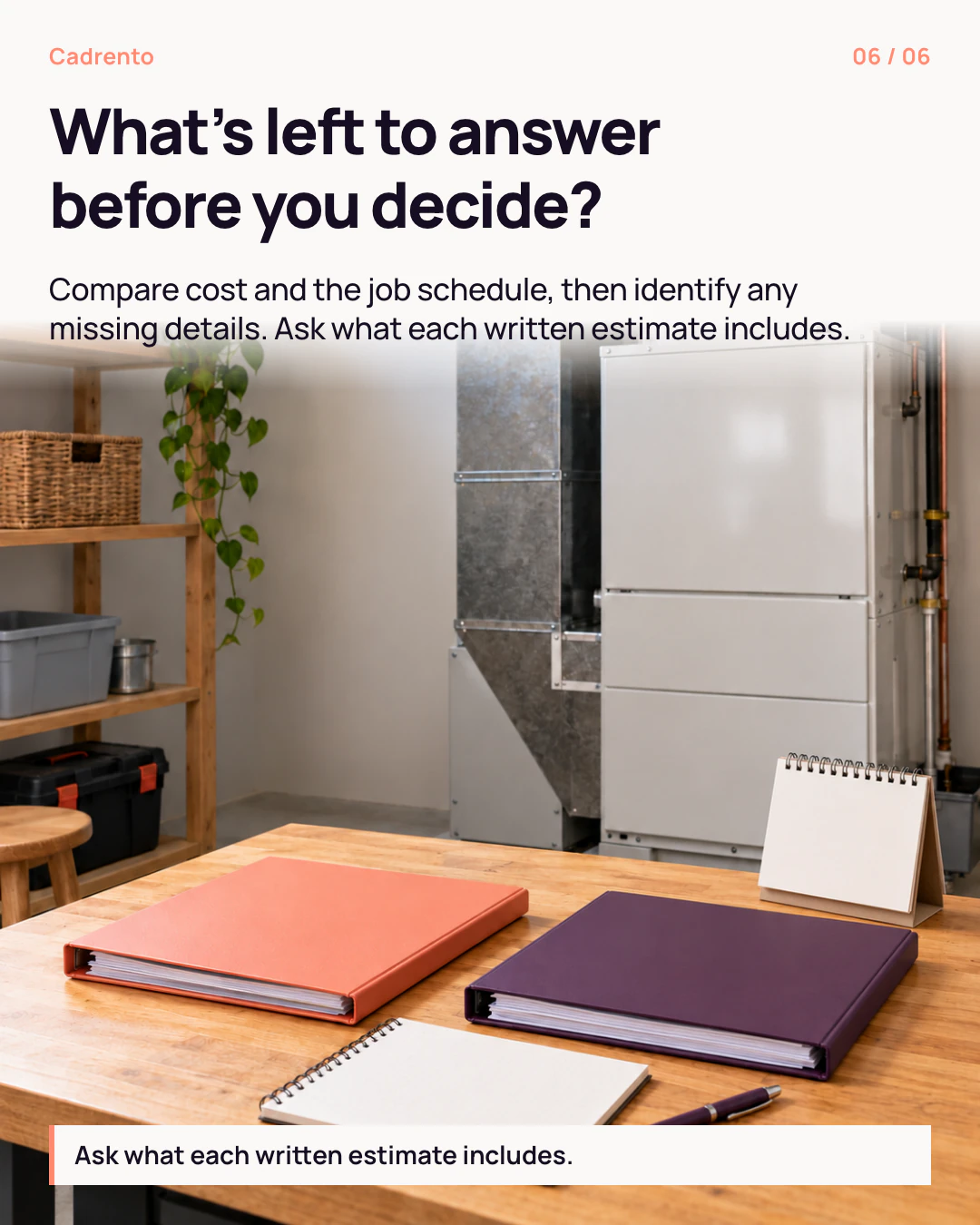
    Slide 6 of 6What’s left to answer before you decide?

    Compare cost and the job schedule, then identify any missing details. Ask what each written estimate includes.

Read caption

Two written options are easier to compare when you can see the work behind each price. For replacement, the model number and efficiency information matter too. Compare warranty information and the job schedule, then note any questions you still have.

Read text

Repair quote or replacement quote? If you’re weighing both options, start with the written estimates. They show what each option includes.

What work does each price cover? Compare the work listed in each itemized estimate. Note any work included in one option but absent from the other.

Which model is offered for replacement? If replacement is offered, look for the equipment model number in the written proposal.

Where is the efficiency information? Compare energy efficiency information alongside price. If replacement is offered, check which equipment the information describes.

What warranty information is in each proposal? Written proposals should include warranty information. Compare what each option says.

What’s left to answer before you decide? Compare cost and the job schedule, then identify any missing details. Ask what each written estimate includes.

Instagram caption

Repair and replacement estimates may describe different work. Compare what each includes, plus the cost and warranty information. If replacement is offered, look for the model number and efficiency information. Check the job schedule before deciding.

Example call to action

Ask what each written estimate includes.

07 / Video

What should a contractor check before recommending a new heating and cooling system?

Open video file

Read caption

Your current system's model and maintenance history give a contractor useful context. So do any rooms that feel uncomfortable.

Read text

Before a contractor recommends a new system, they should check your current equipment and home. Your home's size, insulation, and windows help determine the right system size. If you have ducts, their condition and airflow should be checked too. Ask what they checked before recommending a system.

VK Clips caption

A new system recommendation should follow an evaluation of your current equipment and home. If you have ducts, their condition and airflow matter too. Ask what they checked before recommending a system.

RUTUBE title

What should a contractor check before recommending a new heating and cooling system?

RUTUBE description

A home evaluation should cover the current system, house size, insulation, and windows. When ducts are present, their condition and airflow matter too. Ask what they checked before recommending a system.

Example call to action

Ask what they checked before recommending a system.

08 / Video

What's in the proposal before heating and cooling work starts?

Open video file

Read caption

Written, itemized estimates help you compare costs, energy efficiency, and warranties across bids. The proposal you sign before work starts should specify the project cost and model number. It should also include the job schedule and warranty information.

Read text

Is heating and cooling work about to start at your home? The proposal you sign should spell out the project cost and equipment model number. It should also include the job schedule and warranty information. Those details put key parts of the job in writing before work starts. If a detail is unclear, you can ask about it before signing. Check the model number on the written proposal.

VK Clips caption

Before heating and cooling work starts, the written proposal should specify the project cost. It should also include the model number, job schedule, and warranty information. Check the model number on the written proposal.

RUTUBE title

What should your heating and cooling proposal include before work starts?

RUTUBE description

Before heating and cooling work begins, a signed proposal should specify the project cost. It should also include the equipment model number, job schedule, and warranty information. Check the model number on the written proposal.

Example call to action

Check the model number on the written proposal.

09 / Stories

Before you compare HVAC quotes

  1. A white HVAC unit in a home utility room, with a closed maintenance folder and blank notebook on a table.
    Frame 1 of 4Do you know your system model?

    Your current system’s model and maintenance history give the contractor useful context.

  2. A view from the utility room into a room with a window; the homeowner writes in a blank notebook.
    Frame 2 of 4Which rooms feel uncomfortable?

    Knowing which rooms feel uncomfortable helps the contractor understand your needs.

  3. Beside the same white HVAC unit, a contractor inspects an accessible duct while the homeowner stands nearby.
    Frame 3 of 4What did the home evaluation cover?

    Your system and home should be checked, including ducts if your home has them.

  4. An open folder with blank sheets, a notebook, and a pen on the same table in front of the HVAC unit.
    Frame 4 of 4What’s in the written estimate?

    Itemized costs, energy efficiency, and warranties help you compare quotes.

Read caption

Before work starts, a written proposal can record costs, model numbers, the schedule, and warranty details.

Read text

Do you know your system model? Your current system’s model and maintenance history give the contractor useful context.

Which rooms feel uncomfortable? Knowing which rooms feel uncomfortable helps the contractor understand your needs.

What did the home evaluation cover? Your system and home should be checked, including ducts if your home has them.

What’s in the written estimate? Itemized costs, energy efficiency, and warranties help you compare quotes.

Example call to action

Keep your notes beside each estimate.

10 / Article

Repair or replace your HVAC system? Start with what you know

Read the full article

You’re deciding whether to repair or replace your HVAC system. The first quote may feel like the answer, especially when a room is uncomfortable. Yet a price is easier to judge when you know what was inspected and included. Start with the information already in your home. Find your current system’s model and maintenance history, and note the rooms that feel uncomfortable. Those details help a contractor understand your heating needs. A home evaluation can help you weigh written options before you sign a proposal for the work.

Gather the details you already have

Before calling a contractor, identify the model of your current system. Gather the maintenance history you have, even if your records are incomplete. Make a short list of rooms that feel uncomfortable. You can use that list to explain the problem without guessing what caused it. Check the license and insurance requirements for contractors in your state, too. Requirements depend on where you live, so the state is the place to start. Bring these details into the first conversation. They tell a contractor what you know so far and what still needs to be examined. An uncomfortable room is useful information, but it does not identify the cause by itself. Keep the repair or replacement question open until the home and system have been evaluated.

See what the home evaluation covers

A home evaluation gives the repair or replacement discussion a firmer basis. Expect the contractor to spend time inspecting both your current system and your home. If a new system is being considered, bigger is not always better. System sizing should account for the house’s size, insulation, and windows. If your home has ducts, the contractor should inspect them for air leaks and check their insulation. Airflow should also be measured against the manufacturer’s specifications. These findings provide context for the written options. Look for a connection between the proposed work and what the contractor inspected. If that connection is unclear, ask what the evaluation found. You are comparing a response to your home’s conditions, not just a piece of equipment.

Compare the written options before signing

Written, itemized estimates make different options easier to compare. Read what work each option includes, along with its cost and warranty terms. If an option includes a new system, compare its energy efficiency information as well. The lowest price may not be the best deal if the system is less efficient. That does not mean a higher price automatically wins. Compare each price with the work included, the efficiency information, and the warranty. Before work starts, read the written proposal you would sign. It should specify project costs, model numbers, the job schedule, and warranty information. Check that those details match the option you intend to accept. If a detail is missing, clarify it before signing. This gives you a written record of what the contractor has agreed to provide.

The repair or replacement choice starts with what you know about your home. An evaluation adds information that a symptom or price cannot provide alone. Written options let you compare the work, cost, efficiency information when relevant, and warranty terms. A signed proposal then records the key details before work begins.

Example call to action

Ask for the options in writing.

Your business. Your own content.

Let’s discuss your content.

Tell us about your business and the formats you need. Scope and availability are confirmed before payment.

Email Cadrento

More industries